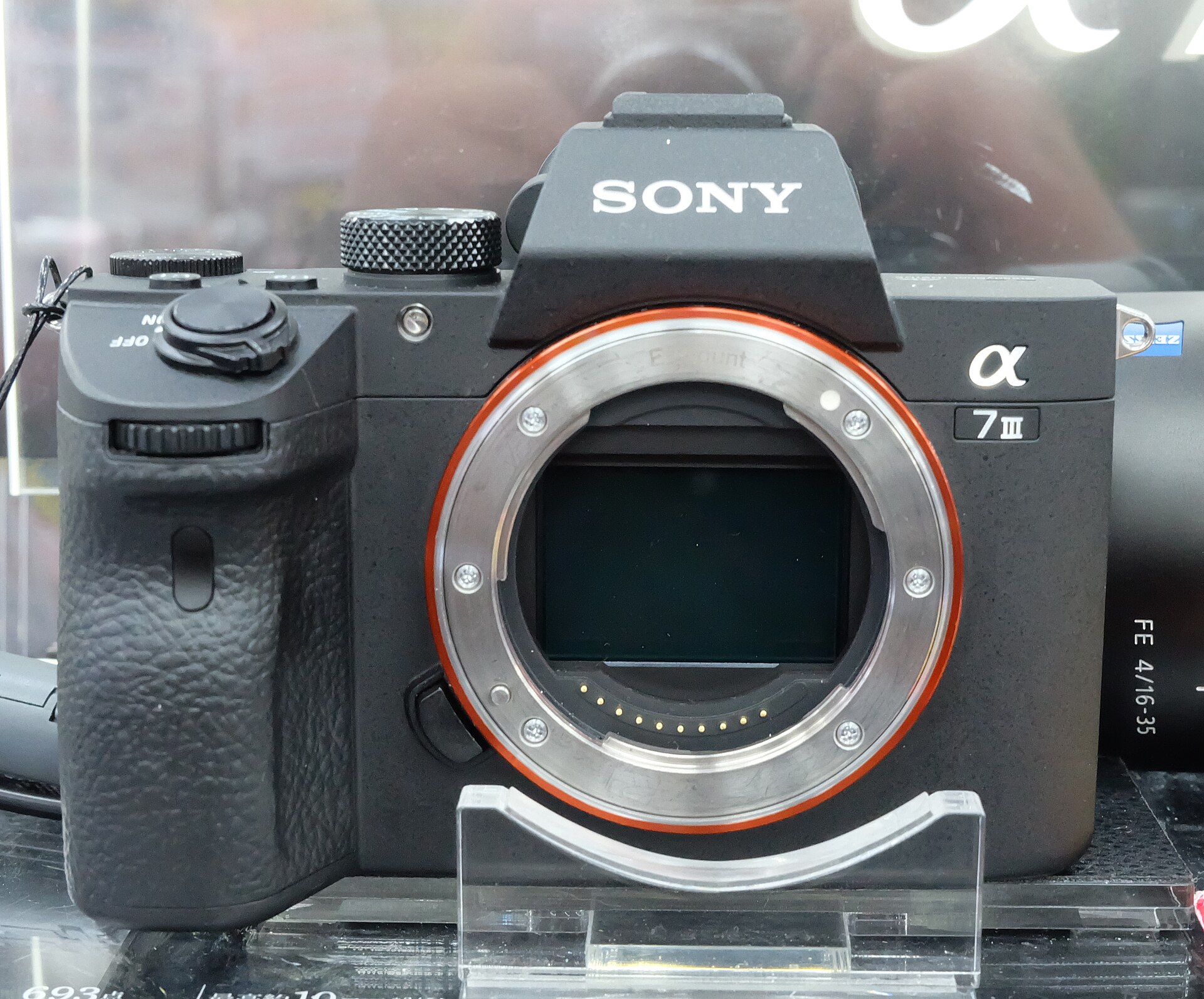

If you’re traveling with a Sony a7 III, choosing the right lens can make the difference between carrying a compact camera bag and packing several lenses you rarely use.
But the lightest lens is not necessarily the most useful. A 167g zoom, a fast 35mm prime, and a 575g all-in-one travel lens solve very different problems.
This guide compares four full-frame Sony E-mount lenses weighing less than 600g, using published manufacturer specifications.
Quick Comparison: Four Travel Lenses
| Lens | Weight | Focal length | Max aperture |
|---|---|---|---|
| FE 28–60mm | 167g | 28–60mm | F4–5.6 |
| FE 35mm F1.8 | 280g | 35mm | F1.8 |
| FE 20–70mm F4 G | 488g | 20–70mm | F4 |
| Tamron 28–200mm | 575g | 28–200mm | F2.8–5.6 |
All four lenses are designed for full-frame Sony E-mount cameras, including the Sony a7 III. The weights above are for the lenses alone, not the complete camera setup.
Size and close-focus details
| Lens | Length | Filter | Closest focus (wide / tele) |
|---|---|---|---|
| FE 28–60mm | 45mm | 40.5mm | 0.3m / 0.45m |
| FE 35mm F1.8 | 73mm | 55mm | 0.22m |
| FE 20–70mm F4 G | 99mm | 72mm | 0.3m / 0.25m (AF) |
| Tamron 28–200mm | 117mm | 67mm | 0.19m / 0.8m |
A note on stabilization: none of the three Sony lenses has optical image stabilization, and Tamron does not list stabilization for the 28–200mm. That matters less on the a7 III, which has 5-axis in-body image stabilization rated by Sony at up to 5.0 stops (CIPA standard) and works with all four lenses.
1. Sony FE 28–60mm F4–5.6: The Minimalist Option
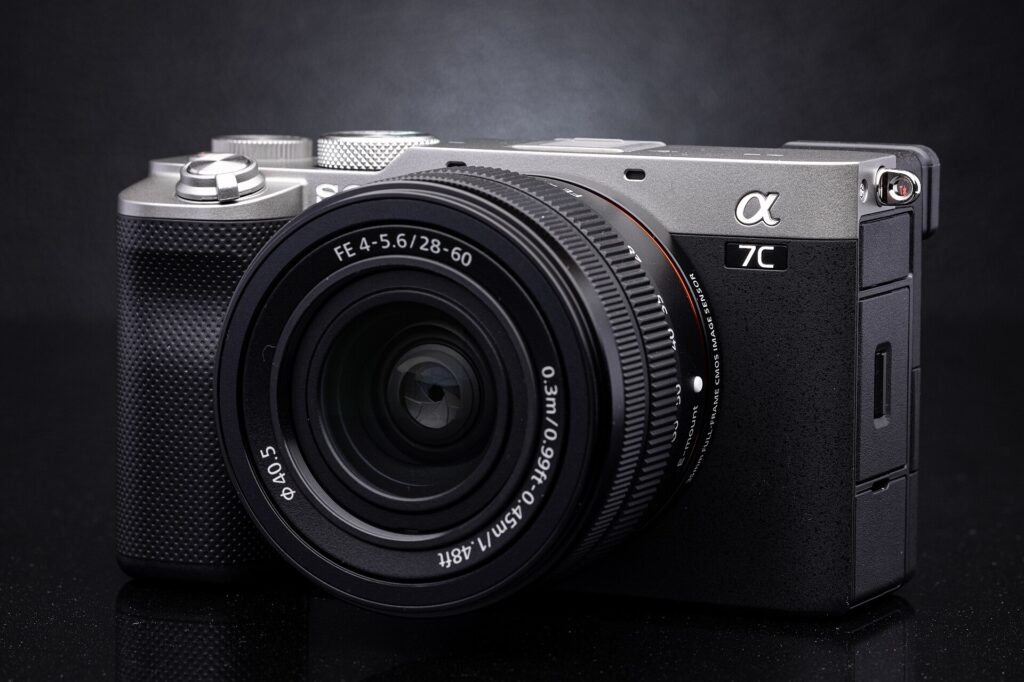
At only 167g and 45mm long, the Sony FE 28–60mm is the lightest and shortest lens in this comparison. It also takes small 40.5mm filters.
Its compact size makes it attractive for city breaks, casual sightseeing, and trips where carrying less equipment is the priority.
Advantages
- Very low weight
- Flexible focal length compared with a fixed prime
- Suitable for everyday travel scenes
Limitations
- 28mm may not be wide enough for tight interiors
- The maximum aperture narrows to F5.6 toward 60mm
- Limited telephoto reach
Who should consider it? Travelers who prioritize portability and mainly photograph everyday scenes in good light.
2. Sony FE 35mm F1.8: For Street Photography and Low Light
The Sony FE 35mm F1.8 weighs 280g.
Its F1.8 maximum aperture is the widest in this comparison, making it useful when photographing in lower light or when more background separation is desirable. It can also focus as close as 0.22m.
A fixed 35mm perspective also suits environmental portraits, restaurants, streets, and everyday documentary photography.
Advantages
- Wide F1.8 maximum aperture
- Compact prime-lens design
- Useful focal length for street photography
Limitations
- No zoom capability
- Less flexible for distant subjects
- Wide landscapes may require changing your shooting position
Who should consider it? Photographers who prefer composing with one focal length and frequently shoot street scenes or evening photographs.
3. Sony FE 20–70mm F4 G: For Architecture and Landscapes
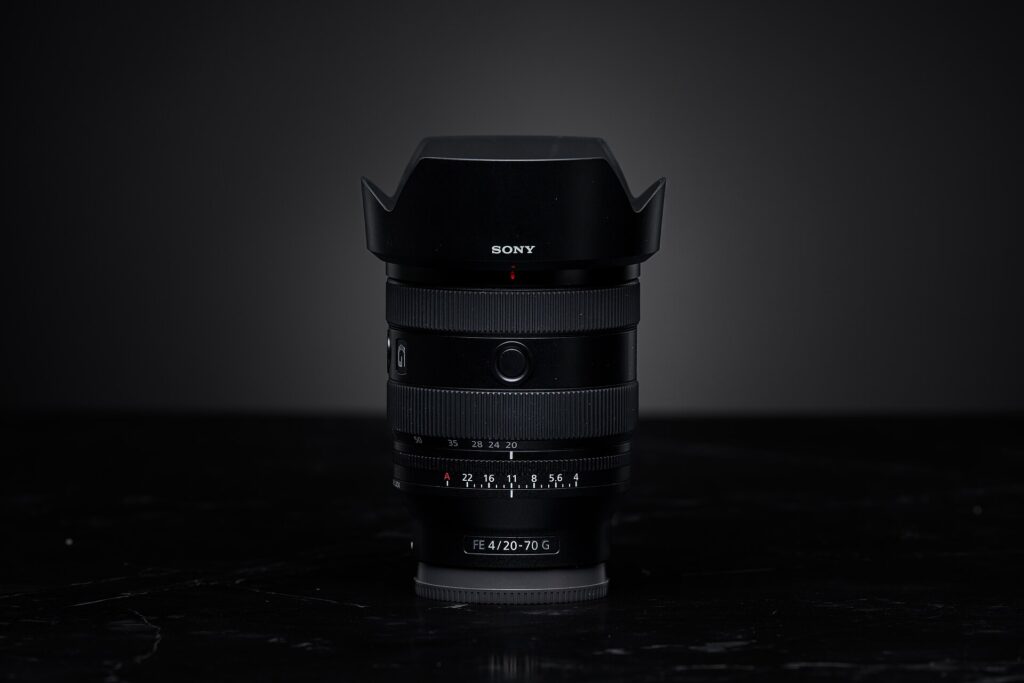
At 488g, the Sony FE 20–70mm F4 G offers a combination of an ultra-wide 20mm starting point and a versatile 70mm long end.
The difference between 20mm and 28mm can be particularly important in narrow streets, interiors, and architectural locations where stepping backward is not possible.
Its maximum aperture remains F4 throughout the zoom range, and its 0.39x maximum magnification is the highest of the four lenses here, which helps with close-up details such as food or signage.
Advantages
- Wider starting focal length than the other zooms listed
- Constant F4 maximum aperture
- Versatile range for city and landscape photography
Limitations
- Heavier than the two smaller Sony lenses
- Less telephoto reach than the Tamron
- Takes larger, more expensive 72mm filters
- F4 does not offer the same large-aperture flexibility as an F1.8 prime
Who should consider it? Travelers who photograph buildings, landscapes, interiors, and general travel subjects with one standard zoom.
4. Tamron 28–200mm F2.8–5.6: The One-Lens Travel Approach
The Tamron 28–200mm F2.8–5.6 Di III RXD (Model A071) weighs 575g and covers a substantially longer focal-length range.
It can reduce the need to carry separate standard and telephoto zoom lenses. At the 28mm end it also focuses as close as 0.19m.
This makes it an interesting option for trips involving both general sightseeing and more distant subjects.
Advantages
- Extensive zoom range
- Can reduce lens changes
- F2.8 maximum aperture at the 28mm wide end
- Moisture-resistant construction, according to Tamron
Limitations
- Heaviest and longest lens in this comparison
- Starts at 28mm rather than 20mm
- Maximum aperture narrows as focal length increases
Who should consider it? Travelers who want one lens for a wide variety of subjects and prefer convenience over the smallest possible setup.
How to Choose Based on Your Trip
Before buying, think about what you actually intend to photograph.
City weekend: A compact 28–60mm is worth considering if low weight matters most. (Official specs)
Street photography and evening scenes: The 35mm F1.8 offers more aperture flexibility. (Official specs)
Architecture and landscapes: The 20–70mm F4 gives you a wider perspective without switching lenses. (Official specs)
Mixed sightseeing and distant subjects: The Tamron 28–200mm provides the greatest focal-length coverage in this group. (Official specs)
Three Questions to Ask Before Buying
Will you really use the telephoto range?
A 200mm option is valuable only if you regularly photograph subjects that require that reach. If most of your photographs are taken between 20mm and 50mm, a longer zoom may add unnecessary weight.
How often do you photograph indoors?
A wider focal length can help in confined spaces, while a larger maximum aperture can provide more exposure flexibility in low light. These are separate advantages.
Do you prefer one versatile lens or a smaller prime?
A versatile zoom reduces lens changes. A small prime offers a simpler shooting approach and, in the case of the 35mm F1.8, a larger maximum aperture.
Final Recommendation
There is no universally best travel lens for the Sony a7 III.
Choose the Sony 28–60mm if minimizing weight is your primary concern, the 35mm F1.8 if you prefer a fast prime, the 20–70mm F4 if wide-angle coverage matters, or the Tamron 28–200mm if you want extensive zoom flexibility.
Before purchasing, compare current prices, availability, seller warranties, and return conditions. Manufacturer specifications cannot replace a hands-on handling or image-quality test.
Editorial note: This comparison is based on manufacturer specifications and shooting-use analysis. We have not tested these lenses for this article, and it is not presented as a hands-on review. This article contains no affiliate or sponsored links.
Official Product References
- Sony FE 28–60mm F4–5.6 (SEL2860) — Specifications
- Sony FE 35mm F1.8 (SEL35F18F) — Specifications
- Sony FE 20–70mm F4 G (SEL2070G) — Specifications
- Tamron 28–200mm F2.8–5.6 Di III RXD (A071) — Specifications
- Sony α7 III (ILCE-7M3) — Specifications
Specifications checked: October 21, 2026.
Image credits
- Featured image: Sony α7 III body by 昼落ち, CC BY-SA 4.0, via Wikimedia Commons. Resized and cropped for display.
- Sony FE 28–60mm on a Sony a7C and Sony FE 20–70mm F4 G by Henry Söderlund, CC BY 2.0, via Wikimedia Commons. Resized for display.